

 risingunknownno birth time
 SunPisces23°50′
 MoonTaurus6°27′
 MercuryPisces4°52′

 VenusAries23°34′
 MarsScorpio2°56′
 JupiterCancer24°29′
 SaturnAries1°23′
 UranusVirgo22°19′
 NeptuneScorpio24°16′
 PlutoVirgo19°13′
 north nodeTaurus9°27′
 0°13′engagement
- 0°26′engagement
- 0°39′engagement
 0°55′engagement
 1°31′separating
 1°35′separating
- 1°56′engagement
- 1°57′separating
- 2°10′separating
 3°00′adherence
- 3°06′applying
- 3°31′separating
- 4°35′separating
- 4°37′separating
- 5°03′separating
- 5°16′separating
- 6°31′separating
- 9°46′separating
- 12°46′engagement
- 12°52′separating
- 14°21′separating
- 14°23′separating
- 14°49′separating
- 15°02′separating
- 15°52′applying
- 16°17′separating
- 17°23′applying
- 17°27′separating
- 17°49′applying
- 18°02′applying
- 18°58′separating
- 19°23′separating
- 19°24′separating
- 19°37′separating
- 20°54′separating
- 21°20′separating
- 21°33′separating
- 22°11′separating
- 23°06′applying


0:004:04
 Naoko Takeuchi · 15 March 1967 · Kofu, Japanno confirmed birth time · noon chart
drag the wheel sideways to read it


- born15 March 1967
- timeno confirmed birth time
- placeKofu, Japan
- rodden

- sectday or night not known
- studiedpharmacy, Kyoritsu
- known forSailor Moon, 1991–97
- marriedYoshihiro Togashi, 1999
- runsPrincess Naoko Planning

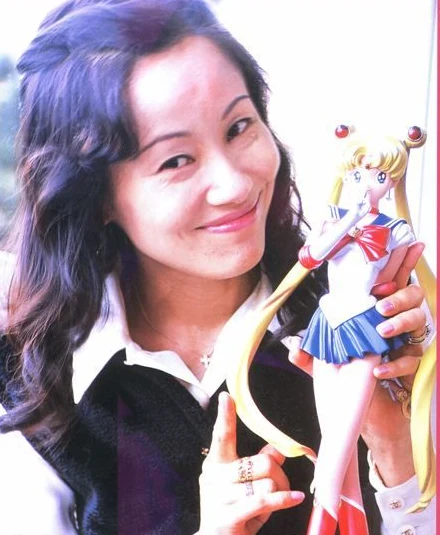
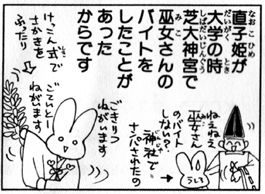
Naoko Takeuchi was born in Kofu, in Yamanashi prefecture, on 15 March 1967. At school she joined the manga club and the astronomy club, and has said the astronomy club stayed with her. She went on to Kyoritsu College of Pharmacy, took a degree in chemistry, wrote a senior thesis on breaking up blood clots with ultrasound and qualified as a licensed pharmacist. While she studied she worked part-time as a shrine maiden at Shiba Daijingu, and she was drawing throughout.
Nakayoshi gave her its newcomer prize in 1985 and its New Artist award in 1986, when she was nineteen. Codename: Sailor V followed in 1991, and Sailor Moon began in Nakayoshi that December. It ran to 1997, sixty acts in eighteen volumes, and took the Kodansha Manga Award for shōjo in 1993. She reads astrology, mythology and the esoteric, has said she believes in astrology, and when she built the team she gave each guardian a planet. She is still drawing them.
what she’s liketop

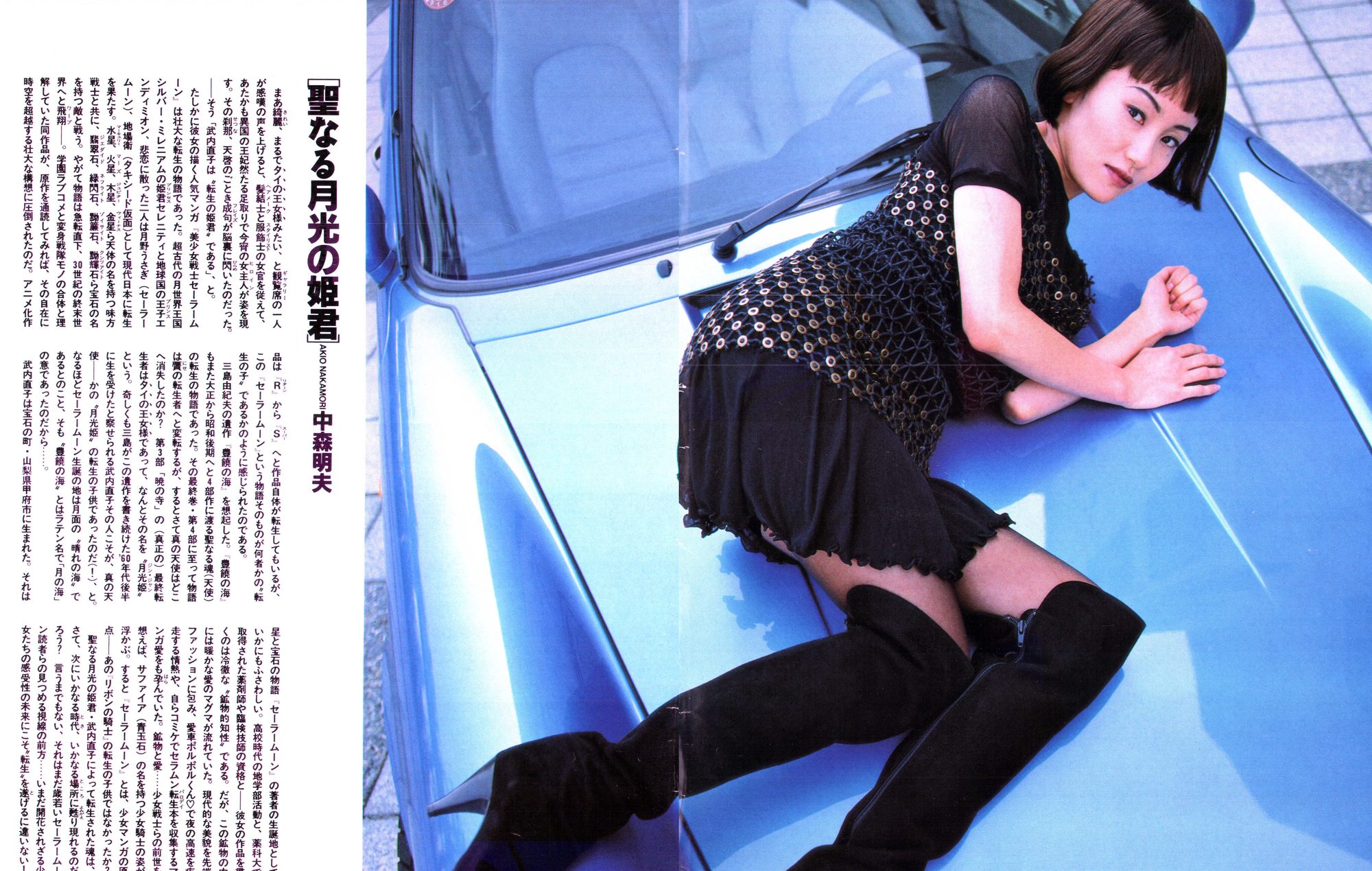
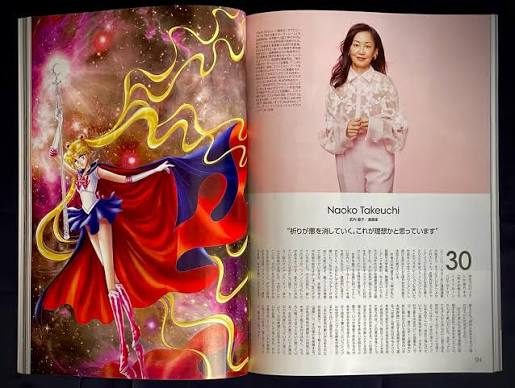
Not an interview, despite the title it circulates under. It is a profile essay by the critic Akio Nakamori, running in the column “Women Catch the News” at number 195, and Takeuchi does not speak in it once. Nakamori reads the gem-named villains — Jadeite, Nephrite, Zoisite, Kunzite — back to Kofu being a jewel town. (click a page to read it)
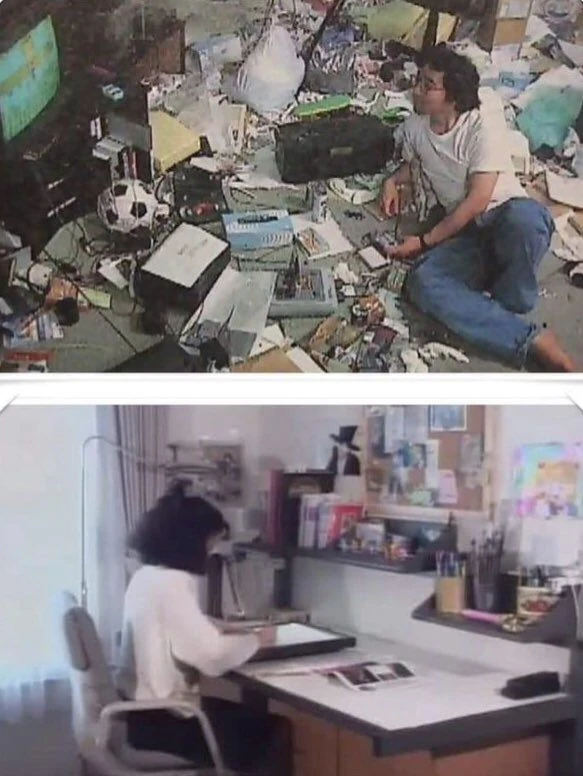
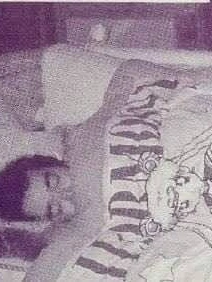
Fumio Osano, her editor from Sailor V on, has called her cheerful and full of “strong conviction”, with a bright side and a dark one. At the twentieth-anniversary event he made a point of saying she never missed a deadline, even though by her own account she reworked catchphrases a hundred times over. Her harsher reputation online, as a diva with a princess complex, comes from fan retellings rather than from anyone who worked beside her, and the people who have worked with her describe her warmly. The most repeated story, about a director running her down, is not in the magazines it is said to come from. She was frank in print, and in a 1994 interview she said that when she likes someone it takes precedence over her work, and that in her relationships she was the one who got angry while the man apologised. PQ Angels, her series after Sailor Moon, was cancelled in 1997 when Kodansha lost seven pages of her manuscript, and she left the publisher for a time. She also stayed a fan of the series, collecting Sailor Moon doujinshi and taking part in Comic Market with a circle of her own.
I was a total nerd girl.
ROLa, November 2013
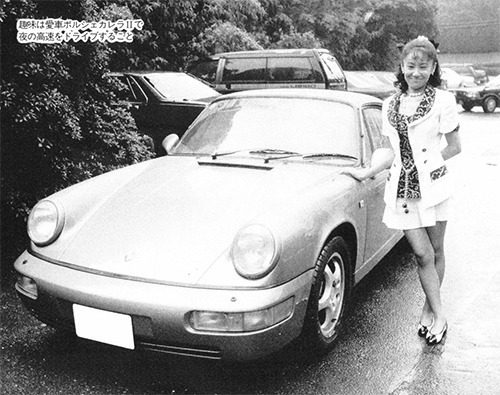
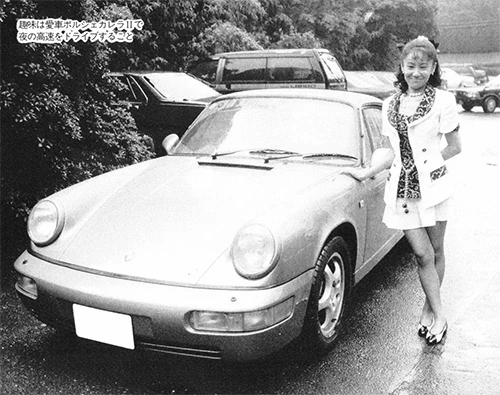
Her Porsche, nicknamed Turbo-kun according to a fan documentary (unconfirmed), was by her own account her favourite place in the world, and late-night drives on the expressway were her hobby. Animerica’s 1996 profile reported a Ferrari as well. In 1995 the Kobe earthquake struck. She auctioned the chance to be drawn, turned the winners into minor characters in her pages, and gave the money to families hit by the quake.
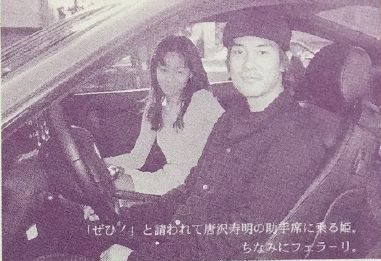
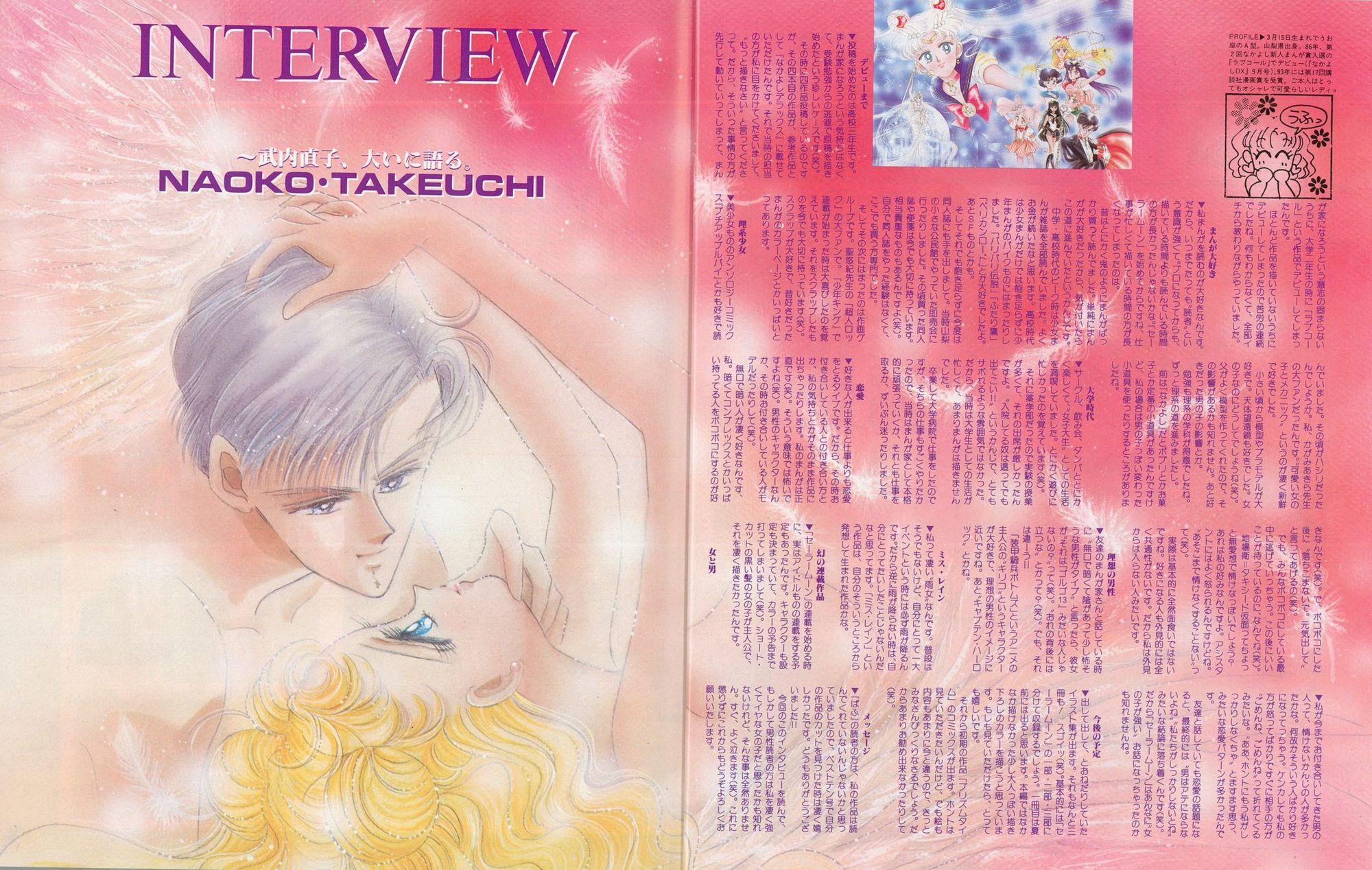
Asked what she would do if she woke up as a man for a day, she is supposed to have answered “have sex”, and left it there. The line is repeated everywhere and sourced nowhere: it is not in Puff’s interview of May 1994, or the Flash piece of 1993, which are where it would sit. Both of those do cover what she likes in men, at length and without much shame. In character is not the same as true.
Have sex.
asked what she would do as a man for a day · widely repeated, no source traced
early yearstop
Takeuchi was born in Kofu, in Yamanashi prefecture, on 15 March 1967. At Kofu Ichi High School she joined the manga club and the astronomy club, and she has cited the astronomy club as an influence on the series. She read every shōjo magazine she could get, and then the boys’ shōnen magazines and doujinshi as well. According to one fan documentary (unconfirmed), she later called her teenage self an unstoppable monster. By her own account, the stories she started drawing were a way to escape studying for university entrance exams. She named Machiko Satonaka, Waki Yamato, Yumiko Igarashi and Suzue Miuchi as her goddesses, and Leiji Matsumoto, Moto Hagio and Keiko Takemiya as gods. Locke the Superman got her into science fiction, and she also built plastic models and telescopes. She went on to Kyoritsu College of Pharmacy, took a degree in chemistry and wrote a senior thesis on breaking up blood clots with ultrasound, and she qualified as a licensed pharmacist.
 While at college she also worked part-time as a shrine maiden at Shiba Daijingu in Tokyo, which is why Rei is one. She was drawing throughout, and Nakayoshi gave her its newcomer prize in 1985 and its New Artist award in 1986, when she was nineteen. After graduating she took the university hospital job she had wanted most.

making Sailor Moontop
Her first serials were Maria in 1989 and the figure-skating story The Cherry Project in 1990. A one-shot, Miss Rain, came from her conviction that it rained at every big event in her life. Codename: Sailor V, about one costumed girl working alone, followed in 1991. It started as a one-shot for RunRun, Nakayoshi’s special edition. She told her editor she had always wanted to do a hero-of-justice story, and he asked for a heroine of justice in a sailor suit.
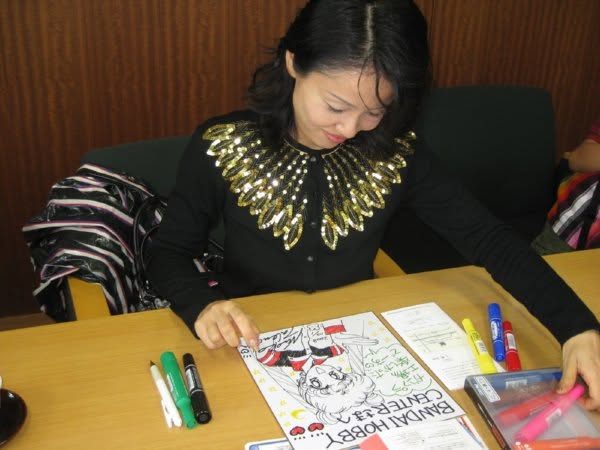
The sailor suit is my editor’s taste, but the tuxedo is mine.
on the costume
When Toei asked about an anime, she reworked it completely. She kept Minako, added four more guardians and gave each of them a planet. Sailor Moon began in Nakayoshi that December and ran to 1997, sixty acts in eighteen volumes. It won the Kodansha Manga Award for shōjo in 1993, and an anime, films, stage musicals and a live-action series followed. She designed some of the merchandise herself, including the Spiral Heart Moon Rod, which she did late one night in a restaurant.
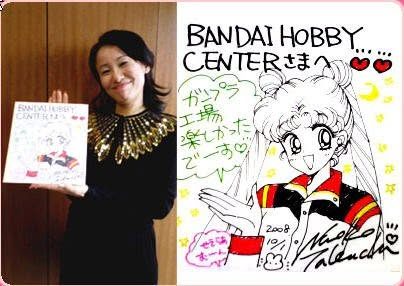
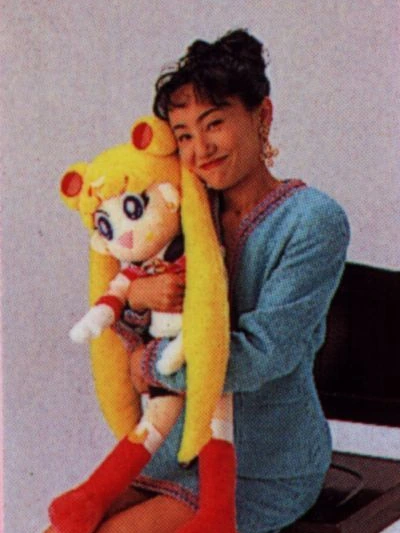
the eye for the looktop
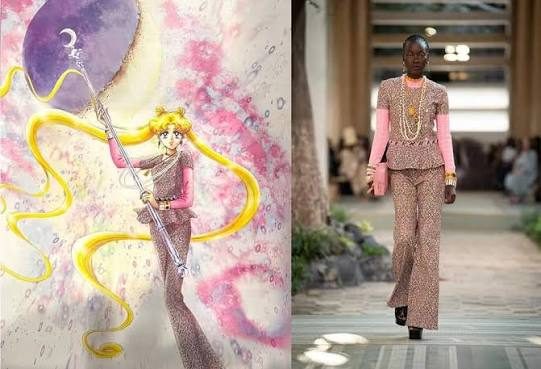
She put real clothes on her characters, and in at least one case she wrote down whose. In the margins of the third Sailor Moon picture collection she notes that Setsuna’s outfit is something Naomi Campbell wore. One line, and it changes what the rest of it is: the clothes in these pages are not all invented, and she knew exactly where she had got them.
Readers have spent thirty years matching the others. The most carefully built set is Angelica Frey’s, for Jezebel in August 2020, made with Emerald King, who studies costume in manga and anime at La Trobe University. Princess Serenity’s gown is Gianfranco Ferré’s Palladium for Dior couture, spring/summer 1992 — a dress built on a Greek column. Setsuna’s black sheath is Chanel couture of the same season. Calaveras wears Christian Lacroix, autumn/winter 1992. Koan’s tutu over a sheer catsuit is Thierry Mugler, autumn/winter 1992, and Galaxia’s gold corset is Mugler again, 1995. Black Lady’s gown is the 1994 Opium advertisement, the one with Kate Moss in it.
Almost none of that is a list she published. They are identifications made by looking, and they hold up by looking — the silhouettes are the same silhouettes — but the only one she has confirmed, she confirmed in the margin of her own art book. Worth saying, because the matches get repeated as though she had given an interview about them.
What the dates say is that she was drawing the current season. Sailor Moon started in Nakayoshi in December 1991 and the couture on these pages is 1992: that spring’s Paris collections, in a comic for girls, inside the year, by someone already working to a monthly deadline and drawing almost all of it herself. The fuku is the opposite case, and the contrast is the point — a Japanese school uniform, and by her own account her editor’s idea rather than hers.

Fashion is one shelf of it. The poses and several of the dresses come out of Alphonse Mucha. Neo Queen Serenity’s wing-shaped bow is Roberto Capucci’s Angelo d’oro of 1987. Snow Kaguya is built from Art Deco figurines. In the second picture collection she wrote that she was dedicating her life to collecting Art Nouveau antiques, which for once is a sentence that explains a whole body of work rather than decorating it.
I am dedicating my life to collecting Art Nouveau antiques.
in the margins of the second picture collection
Vogue Japan named her to The Ones to Watch for 2023 and interviewed her for the January 2024 issue, out on 1 December 2023, with a new drawing of Usagi beside the piece. Asked what she had kept and what she had changed in thirty years, she said she had filled the series with the things she liked at the time — fashion, places, music, her favourite colours — and that she had been free to draw as she wanted. The interview is in Japanese and has not been published in English; that is as reported.
always a battletop
When she pitched a squad of five fighting girls, the men at Nakayoshi told her a fighting team always had a comic heavy one and a nerd in glasses, and asked how all five could be beautiful. She resolved to show those “old grandpas” that beautiful girls could be good for business and not to leave her concept “in the hands of old men”, and she kept all five beautiful. The men also steered her away from the pastel palette she wanted toward bold blues, greens and dark pinks, and they turned down the silver she first gave Usagi’s hair as too dull to sell a magazine, which is how Usagi came to be blonde. She said decisions like that were “always a battle”.
You know, Osabu, you were a really strict editor.
to her editor Fumio Osano, ROLa, September 2013
Oh, those old men. I don’t think they understand girls’ comics at all.
ROLa, 2013
In 1996 she told Animerica why her heroes are girls. She and her friends, students and office workers, talked about love and work and kept coming to the same conclusion, not to depend on men.
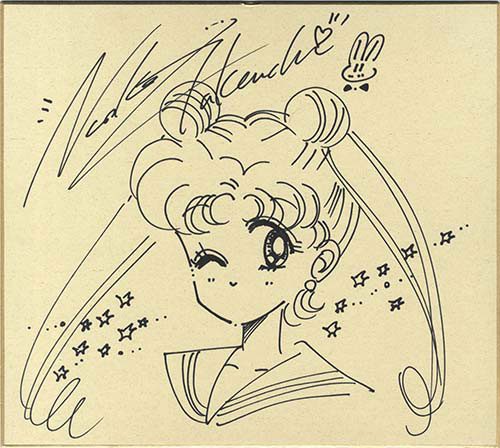
I think that women are actually stronger, and I wanted to draw that in Sailor Moon. Maybe that’s why my male characters die off so easily.
Animerica, 1996
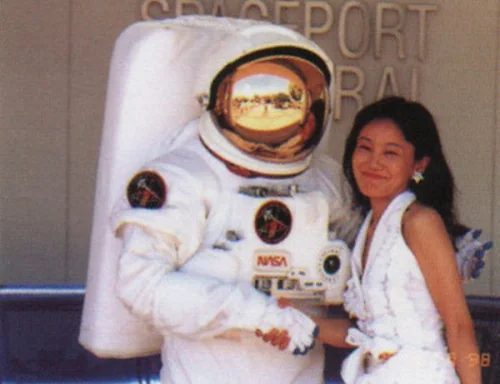
Her idea of a hero came from boys’ science fiction (Space Cruiser Yamato, Leiji Matsumoto’s Captain Harlock, Chirico from Votoms, “dark characters with shadows”). She thought Tuxedo Mask was a collage of them, and she was shocked when the anime made him funny. Usagi’s buns were modelled on a rabbit’s ears, and Takeuchi wore her own hair the same way. The Apollo missions left an impression on her, and she said, “I always wanted to go to the Moon”. Volume 9 of the manga carries a photo of her beside a moon rocket at NASA.
sailor moon goes globaltop
Spain and France had it from December 1993, and by the time North America picked it up it had been sold on into a couple of dozen territories. So the American launch was not the moment her work left Japan. It was the last big market to arrive, about twenty months behind Europe, and the trip she wrote up for her readers was a visit to something already well underway.
Almost everything she has said about the series abroad is about America. No interview has turned up in which she talks about the French, Italian, Spanish or Latin American versions, and that silence is worth naming rather than filling: what follows is her on one country, not her on the world.
Canada got it before the States, on YTV in August 1995, and that is where it worked. The English dub reached American television three weeks later, in slots at six and seven in the morning. Bandai, which made the toys, bet they would follow the Power Rangers, and dropped the licence within a year. An American news programme covered the launch as a toy story and featured her, a young woman who had made a hit comic in which all the heroes are women. Through a translator she said nothing like it had existed before. The footage circulates among fans labelled as Dateline NBC, but no air date, listing or transcript for it has ever turned up, so the programme is less certain than what she said on it.
If it makes girls feel good and want to see more then I’m happy.
to an American news programme, 1995
The report said she was worried about the changes being made for America, which meant more clothes on the heroines and less of the flirting.
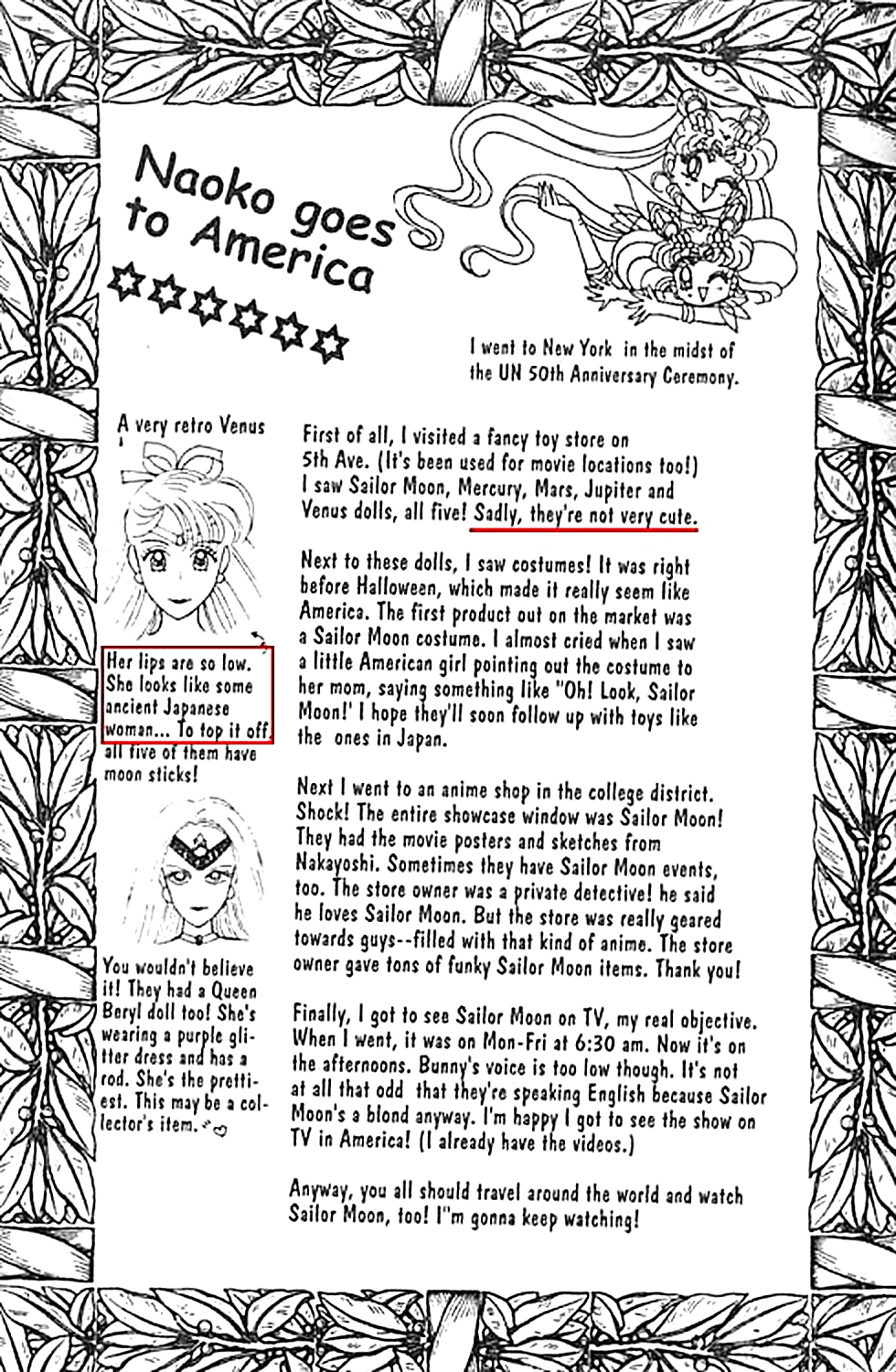
In October 1995 she flew to New York to see it for herself, while the city was in the middle of the UN’s fiftieth-anniversary ceremonies, and she wrote the trip up for her readers as “Naoko goes to America”. In a toy shop on Fifth Avenue she found American dolls of all five guardians, and her comment was, “Sadly, they’re not very cute.” Venus’s lips sat so low that the doll looked to her like an ancient Japanese woman, and all five had been given moon sticks. The Queen Beryl doll, in a glittery purple dress, was the exception. In her view “she’s the prettiest”, and the doll might be a collector’s item. It was just before Halloween, and Sailor Moon costumes hung next to the dolls. She almost cried watching a little American girl point one out to her mother. She found an anime shop with a whole window of Sailor Moon, and she got up for the 6:30 a.m. broadcast, her real objective, where she decided the heroine’s English voice was too low. The next summer Animerica asked whether she had seen the English version. “Of course!” she said, and although the story was meant to be about Japanese girls, “there’s no problem seeing them as American girls. It’s natural and a wonder at the same time.”
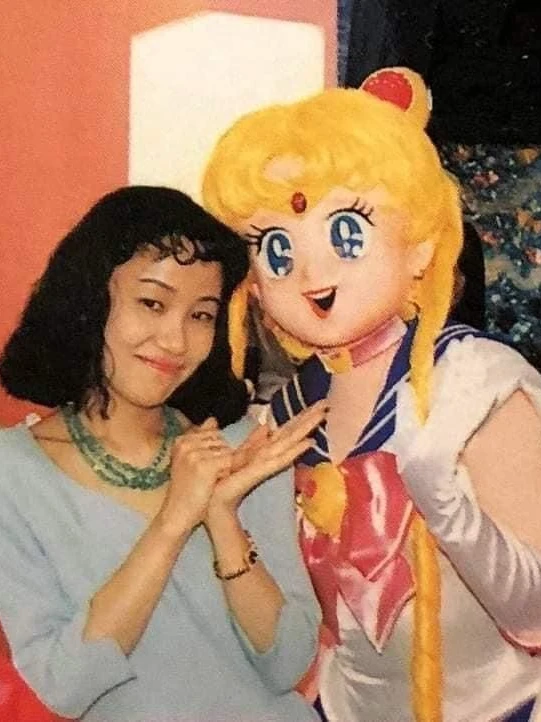
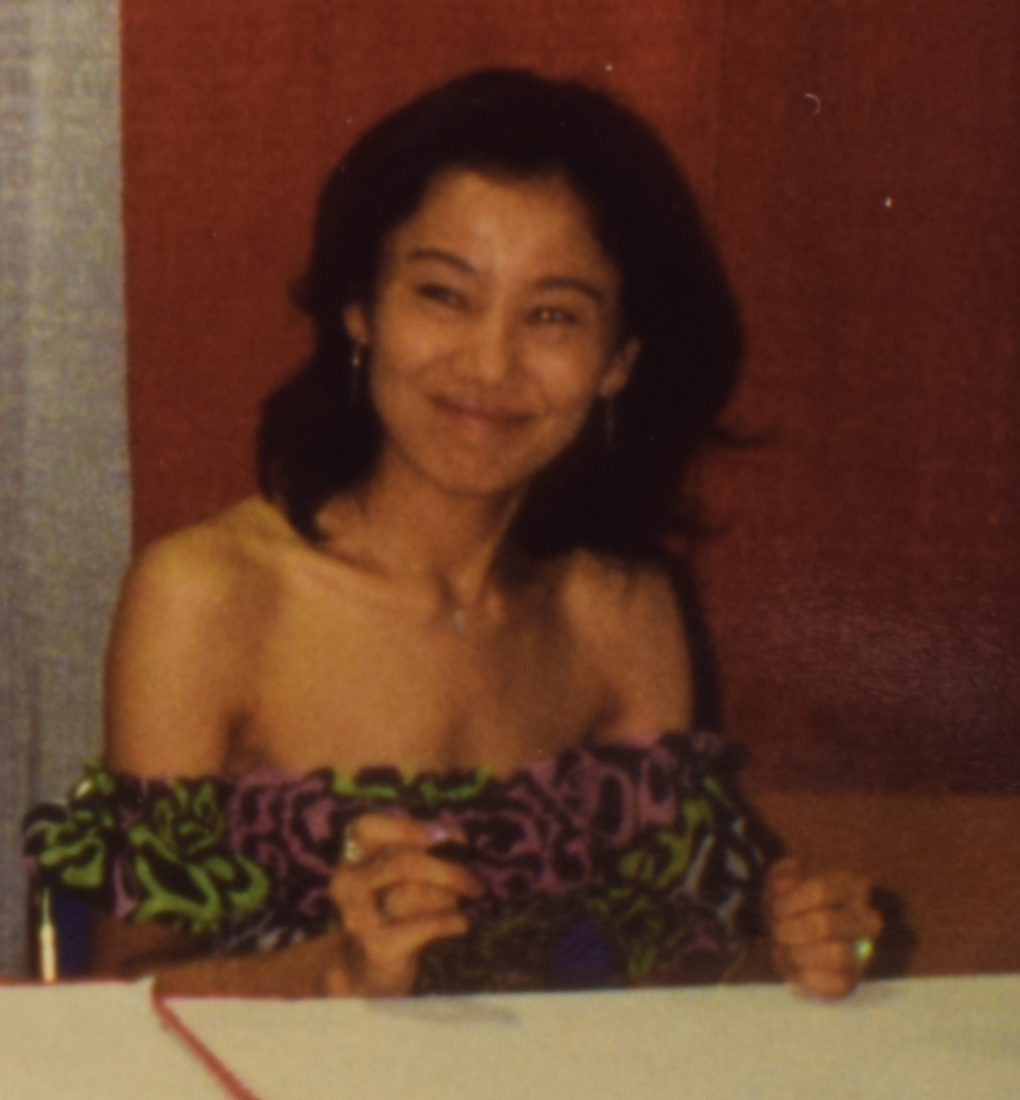
In August 1998 she came back to the United States, this time to meet the fans at San Diego Comic-Con, and went home with its Inkpot Award. By then American fans had spent three years with a dub that stopped partway through its second season and rewrote much of what it did air (Zoisite, for one, became a woman). What happened next is the part American fandom still argues about. A campaign called Save Our Sailors spent 1996 writing to the show’s advertisers, and the show did come back: reruns on USA Network from June 1997, then Cartoon Network’s Toonami from June 1998. Whether the campaign caused any of it has never been shown. Its own boycott failed, the sponsor that returned was the one it had not targeted, and the money for the unfinished episodes is reported to have been found before the campaign acted at all. The seventeen that were missing finally aired that November, after her visit. Most of the fans who came to see her had pieced the real story together from laser discs, fan clubs, comics and the early internet, as they told her themselves.
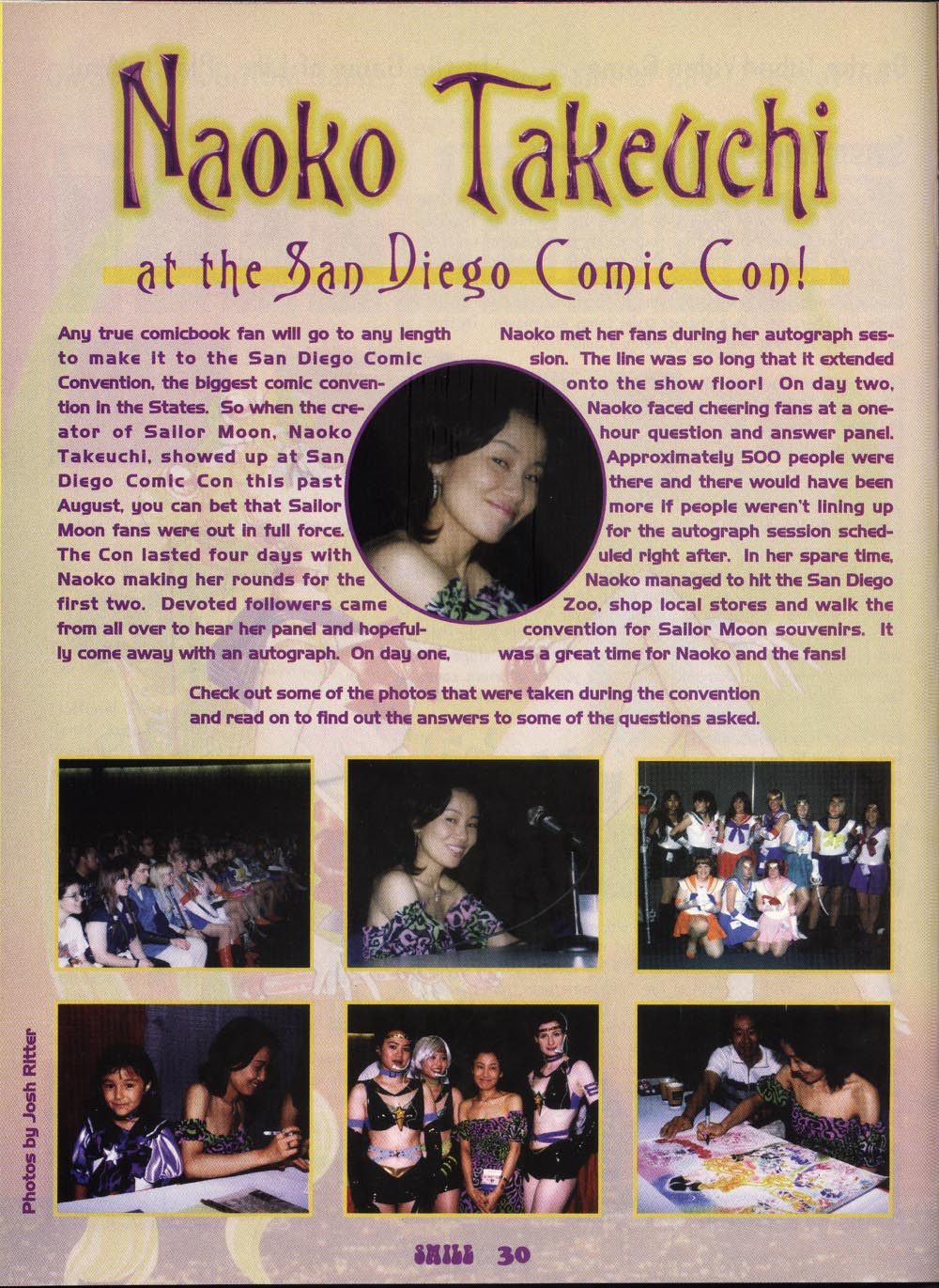
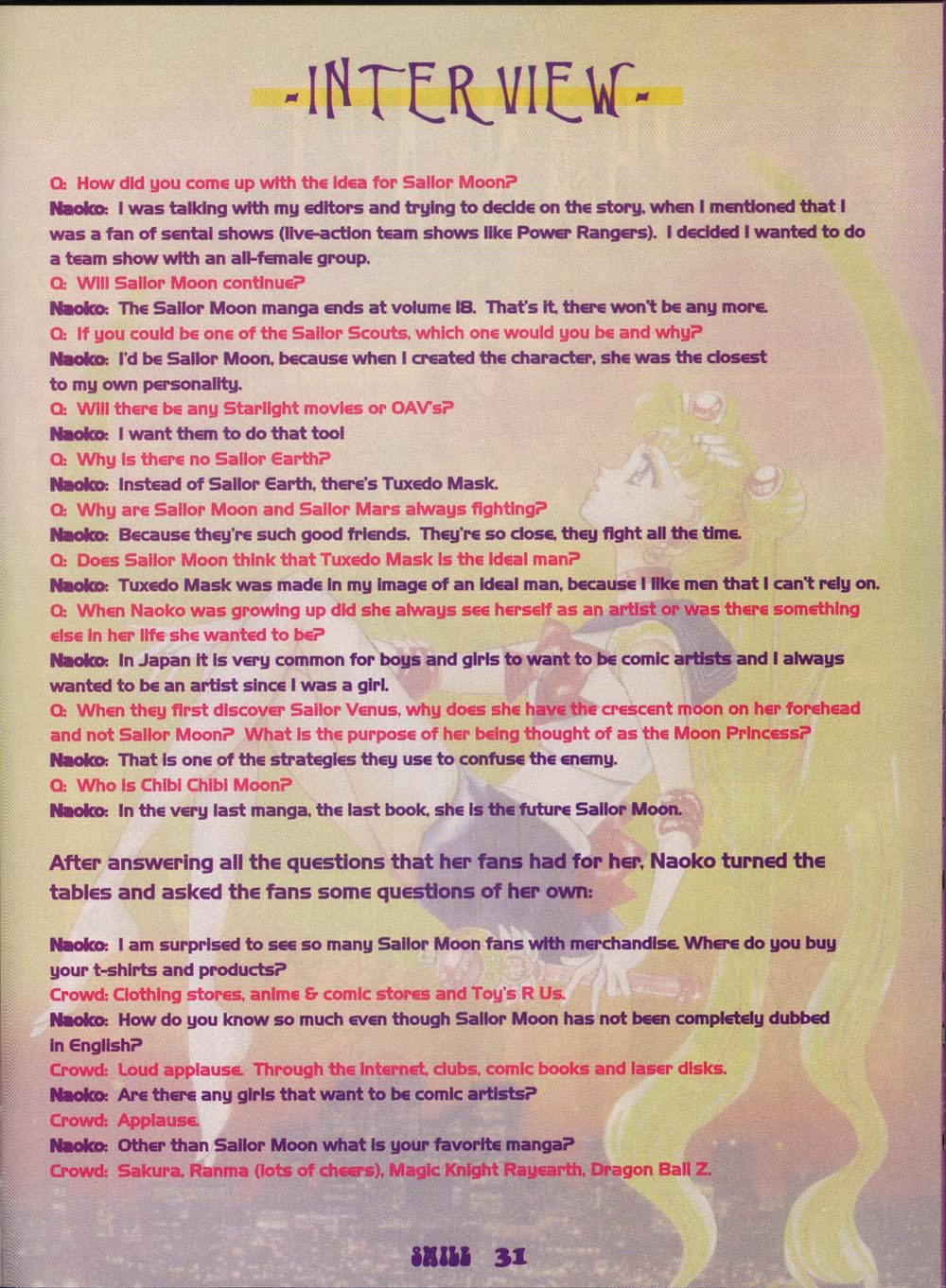
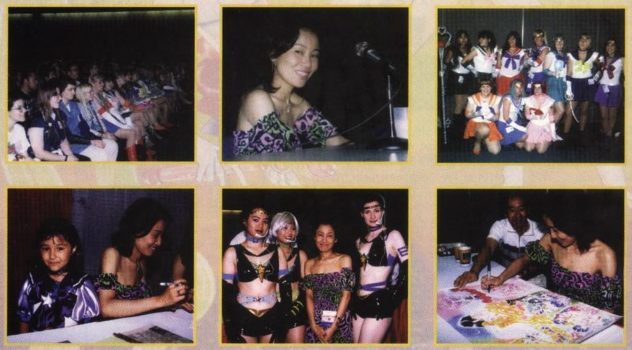
The pages this section is built from. Smile reported an autograph line that ran out onto the show floor, and some five hundred people at her hour-long panel. (click a page to read it)

Smile magazine reported an autograph line that ran out onto the show floor, and some 500 people at her hour-long panel on the second day. She answered their questions directly. All the guardians are girls, and Haruka, in the words reported, “has always been a girl and always will be”. Haruka and Michiru were a couple. The Starlights were women in her manga, and she wasn’t pleased that the anime had changed that. There is no Sailor Earth because Mamoru is the Earth’s guardian. Usagi and Rei fight all the time, she said, because they’re such good friends. Then she asked the room where they bought their merchandise, and how they knew so much when the series hadn’t even been fully dubbed. When the English dub of S arrived, it made Haruka and Michiru cousins.
the years she drew herselftop
Sailor Moon finished in 1997, and what she started next was PQ Angels, in Nakayoshi from September that year: two alien girls hunting for their lost princess, who turn into cockroaches. It stopped after four chapters and has never been collected. The account that has always followed it is that Kodansha lost pages of her manuscript.
Then a decade in which very little ran. Love Witch lasted three chapters in Nakayoshi in the spring of 2002 — a girl is given a perfume bottle and becomes a witch, at a price — with a side story that September and no reprint since. Toki☆Meca! began as a one-shot in 2001, came back as a serial in January 2005, stopped in April, resumed that November and ended in May 2006. It is the only series she has finished since Sailor Moon and Codename: Sailor V.
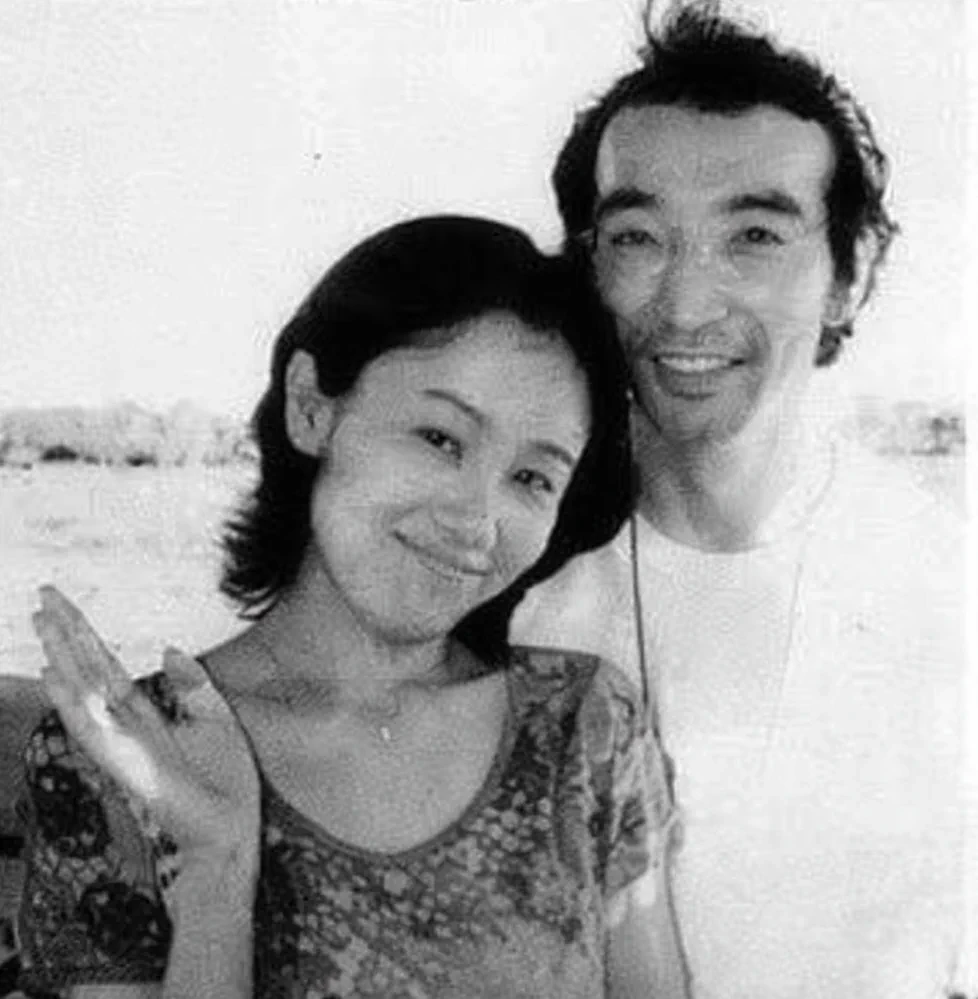
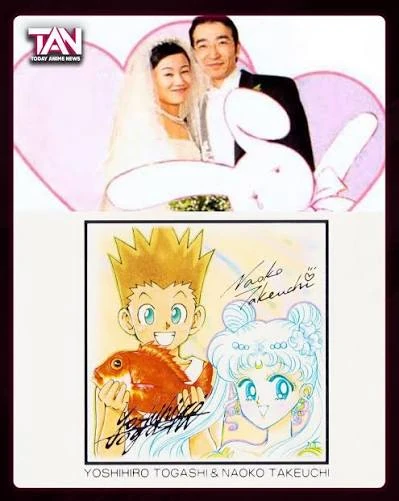
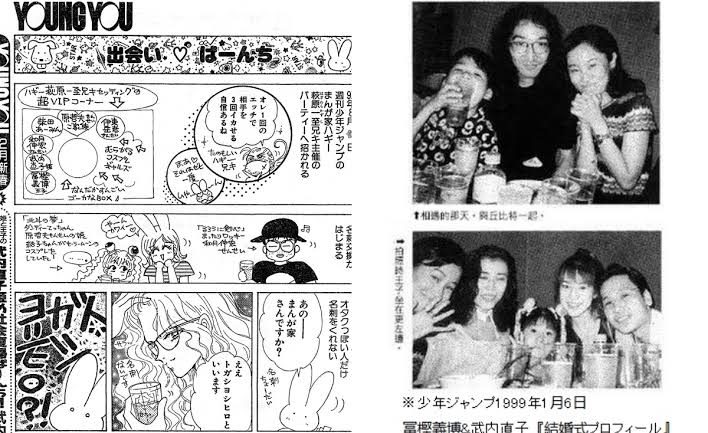
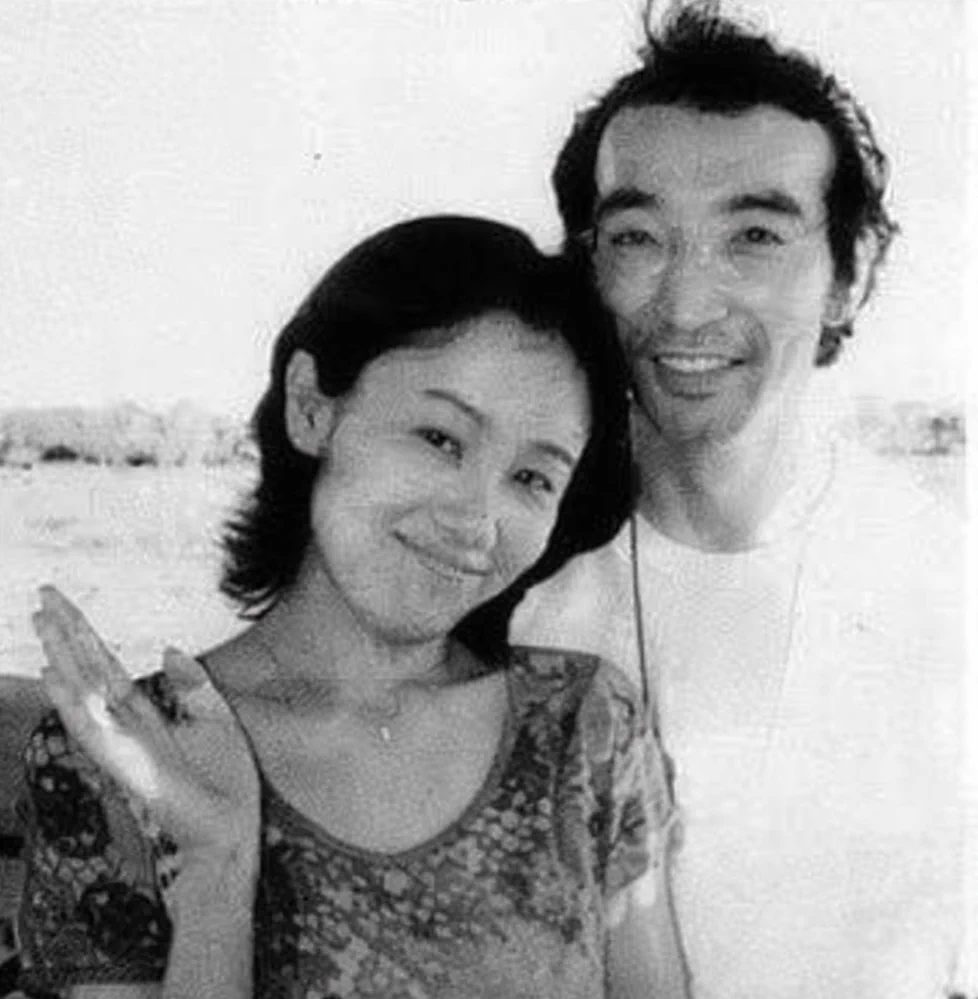
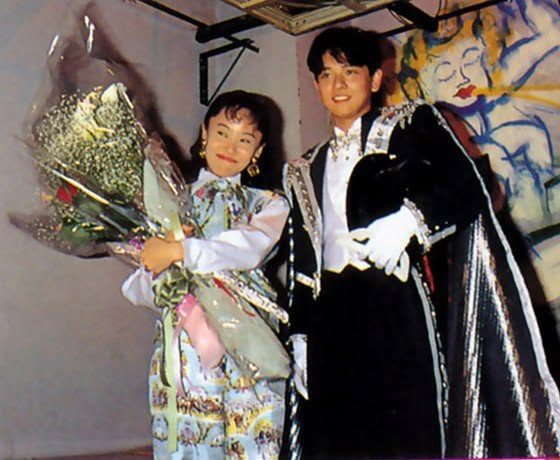
She married the manga artist Yoshihiro Togashi (YuYu Hakusho, Hunter × Hunter) on 6 January 1999. Megumi Ogata , the voice actress who had played Haruka, introduced them. They had first sat side by side at a Weekly Shōnen Jump party in August 1997. She was already a fan of his Level E, and when Hunter × Hunter began she spent time helping out around his office.
It nearly did not happen. Around October 1998 she made him say what he thought marriage was, and he gave her terms: separate surnames, separate homes, both of them still working, neither interfering in the other’s job. No children, no legal marriage, no ceremony. Cheating allowed, on both sides. She called the wedding off in November.
That account is her own, in Young You in January 1999. The same month Weekly Shōnen Jump carried a different one, also hers: she asked him to dinner for her birthday, he did not come, she got drunk and rang him to ask where they stood, and he said he had been thinking about marriage. Both were published within weeks of the wedding, and the dates in them do not line up.
She runs her own studio, Princess Naoko Planning, set up to look after her properties. It ended up looking after her husband’s as well, and is credited on Level E and the 1999 Hunter × Hunter anime.
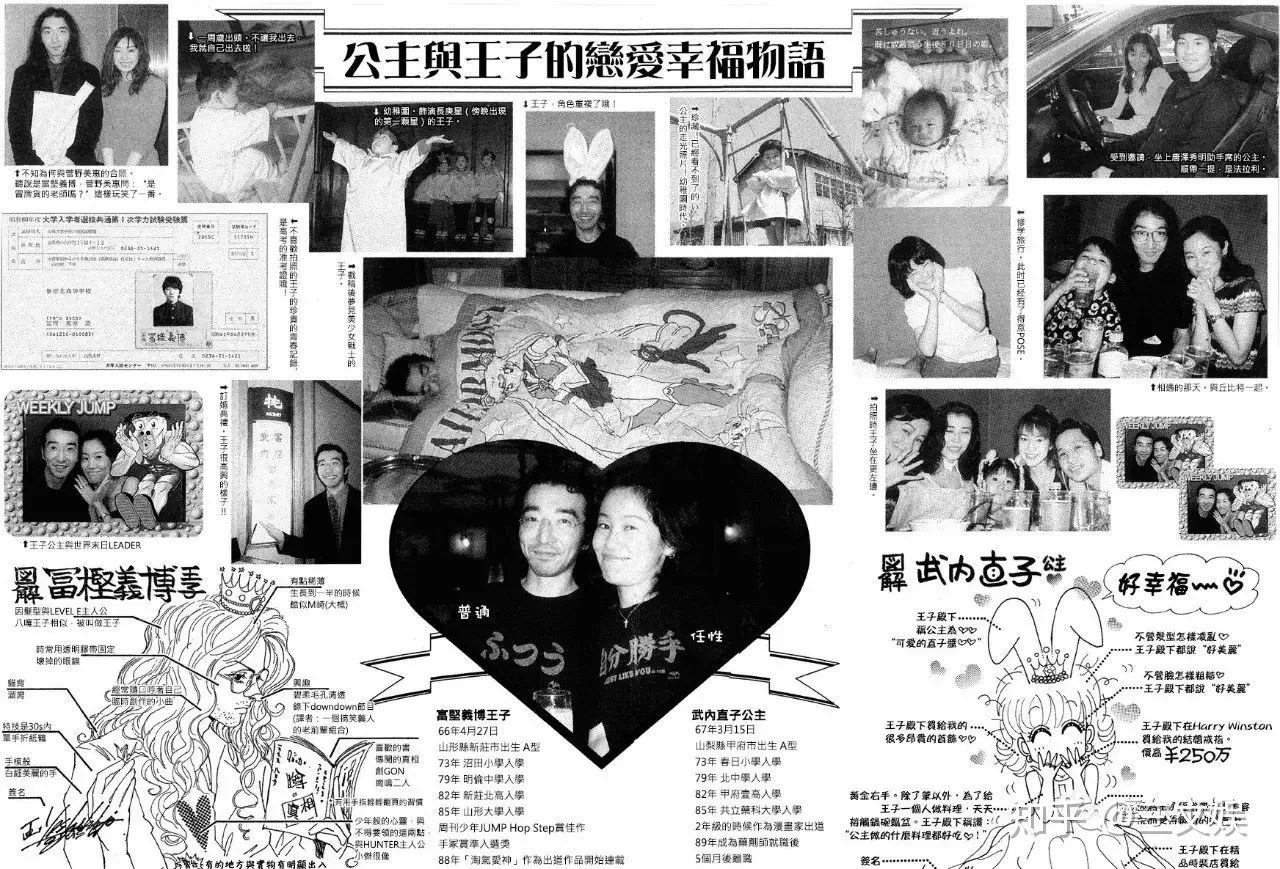
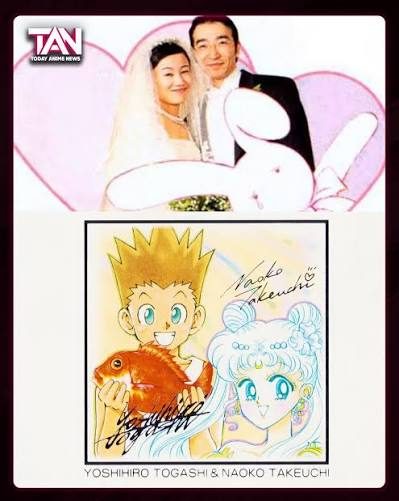
Their thanks to readers, with photographs and a drawing they made together. They married on 6 January 1999. (click a page to read it)
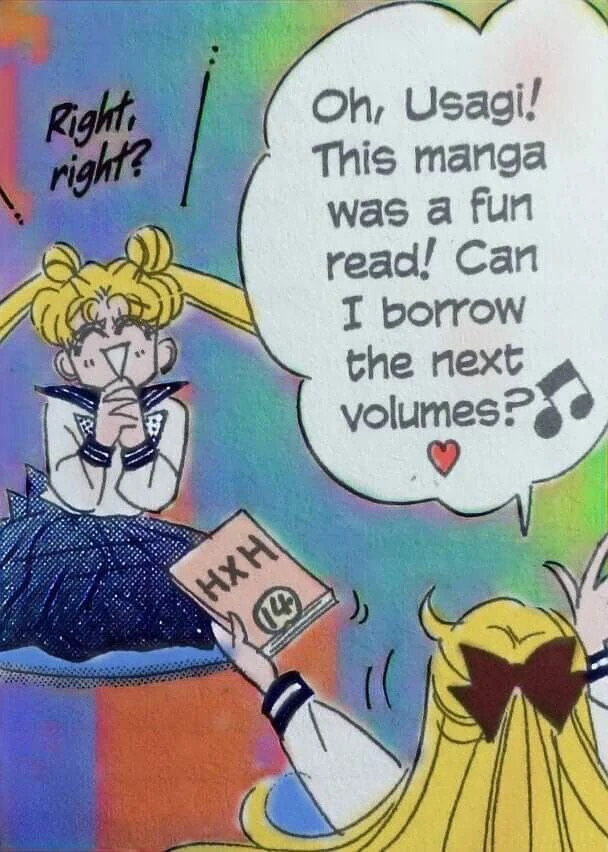
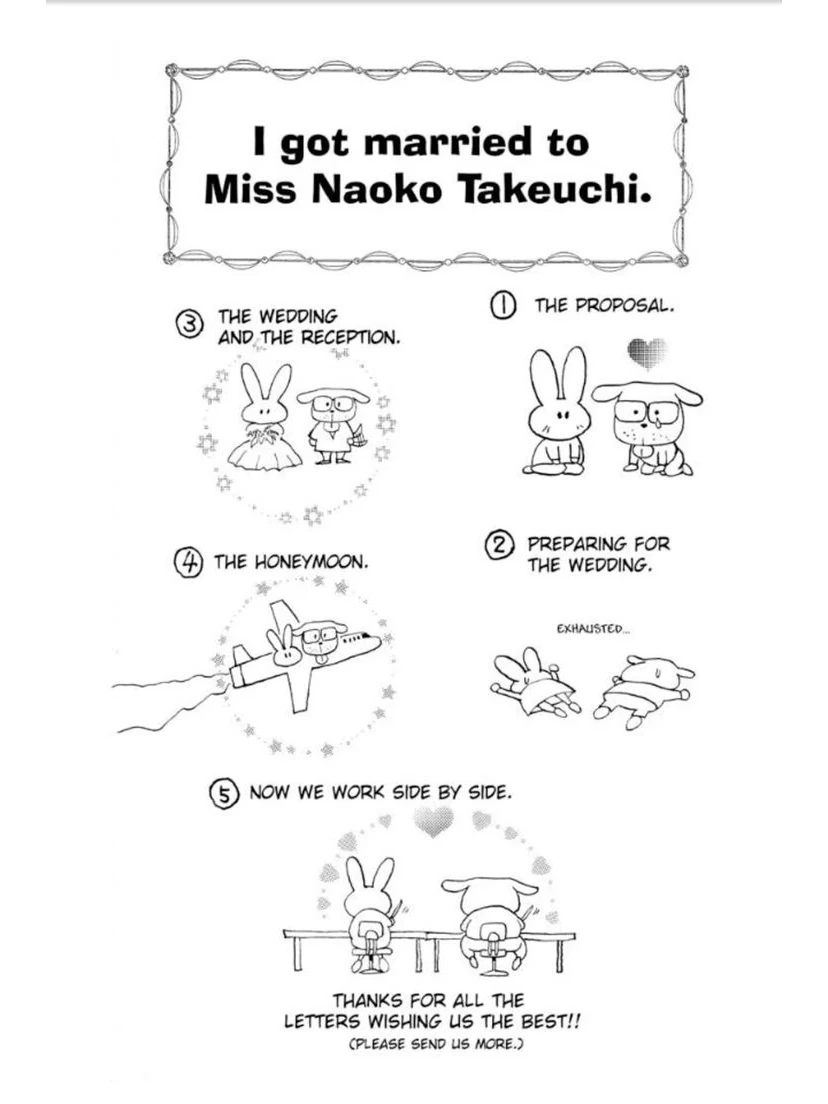
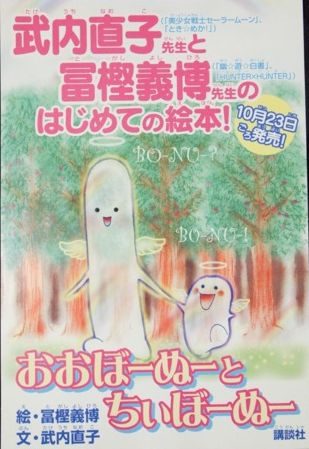
They have a son, born in 2001, and a daughter, born in 2009. She lost a pregnancy between the two, and said so in print herself. In her author’s notes she draws herself as a little rabbit, Togashi as a dog and their son as a puppy. In 2005 she wrote a picture book, Oobōnū to Chiibōnū, as a birthday present for her son. Togashi illustrated it.
The magazine the Punch! comics ran in. The February 2001 issue carried her first month as a mother. (click a page to read it)
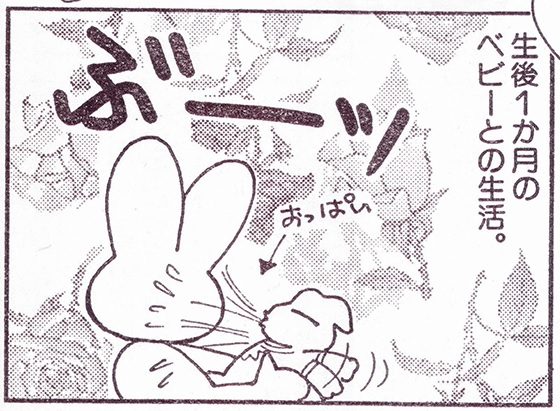
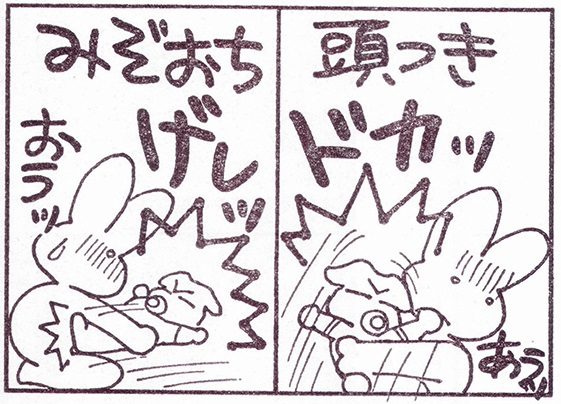
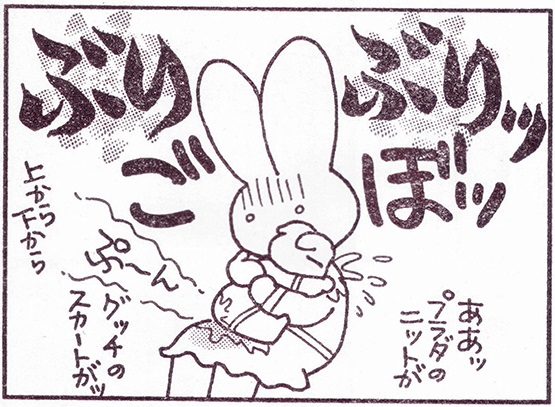
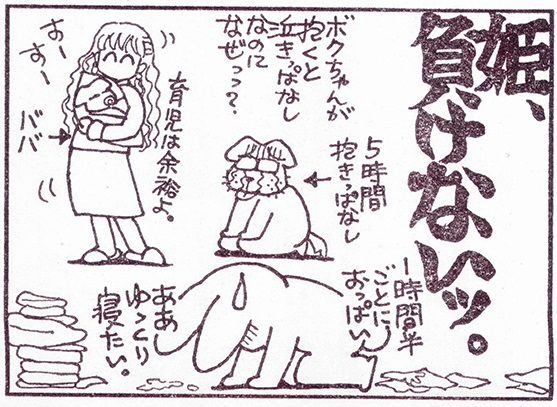
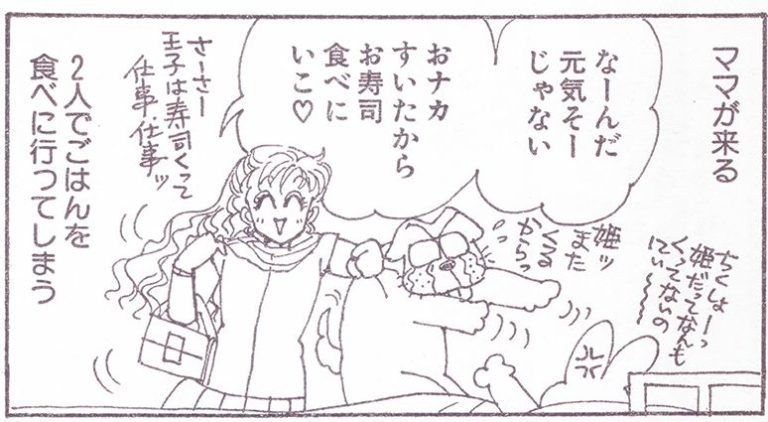
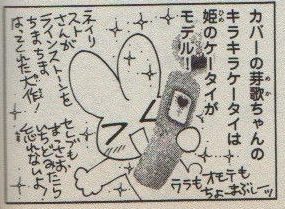
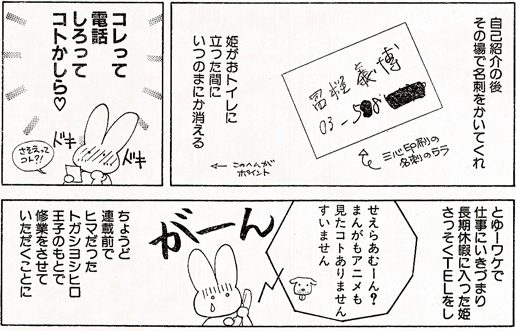
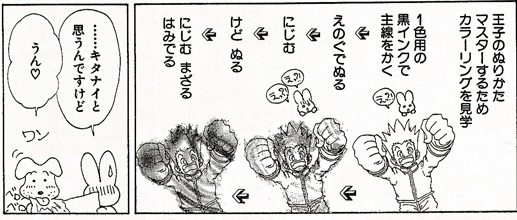
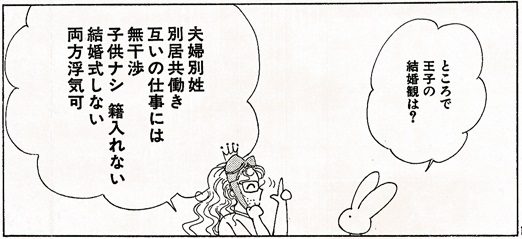
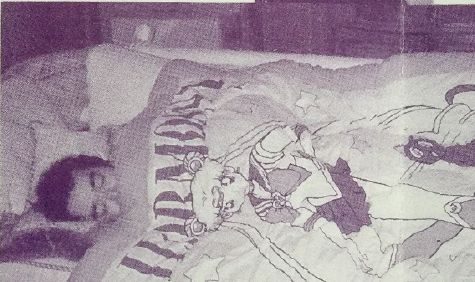
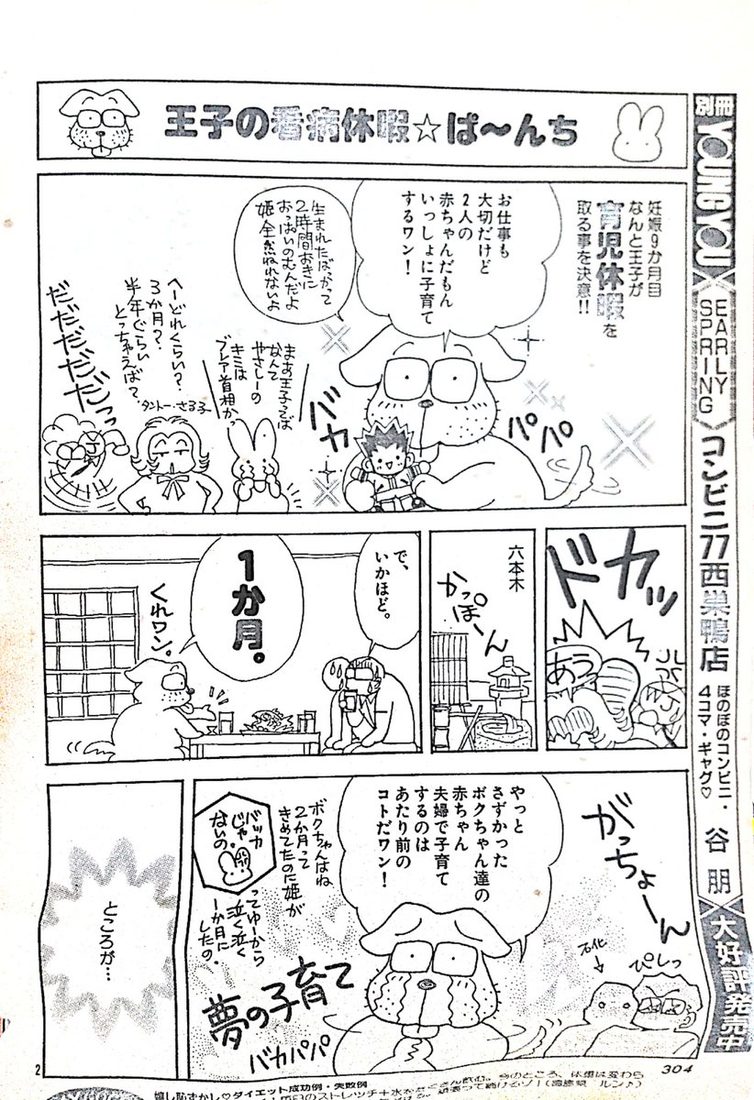
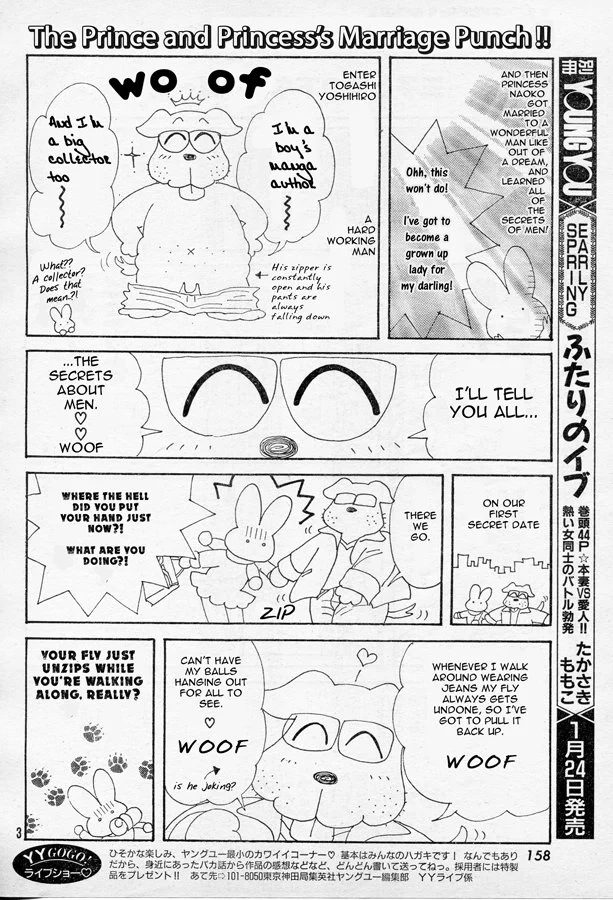
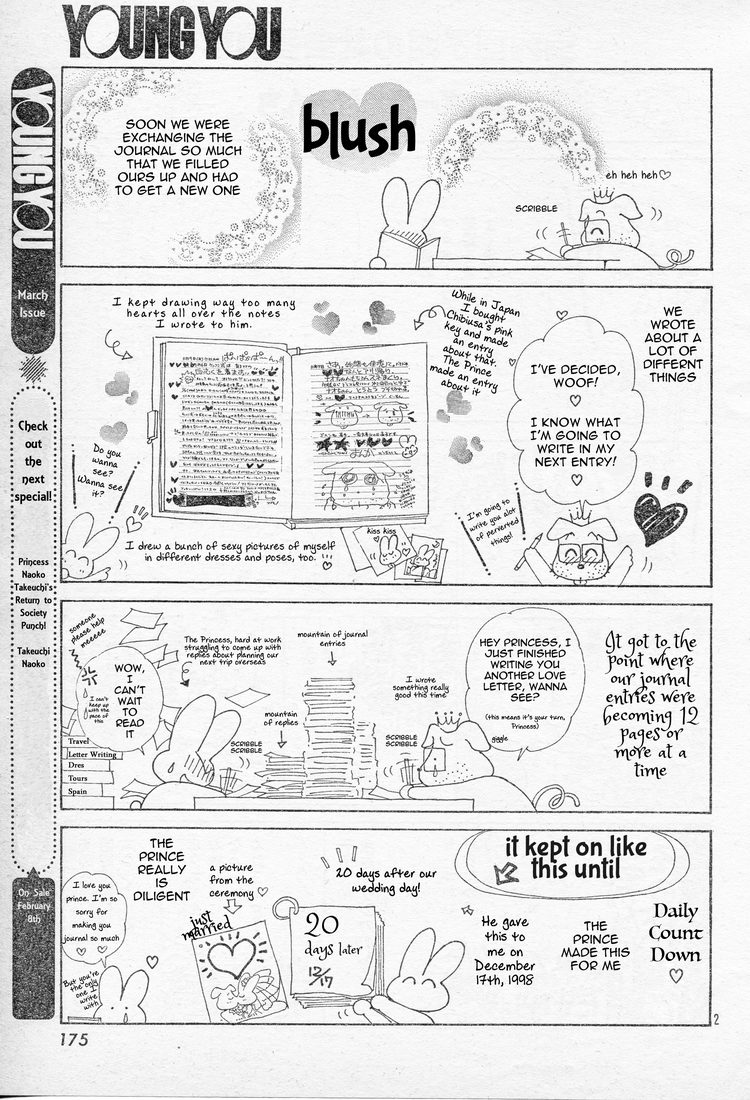
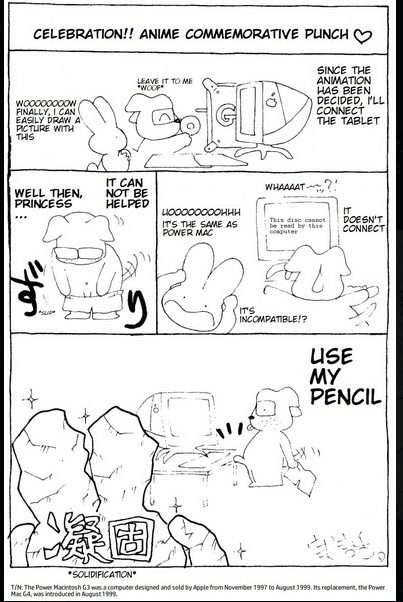
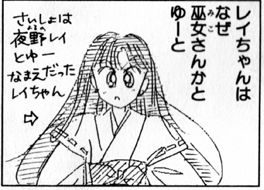
She drew her own life as a comic for six years: herself as a rabbit, Togashi as a dog, their son as a puppy, her editor as a pig. The marriage, the children, a trip to Egypt, a row with her publisher, and a pregnancy she lost between the two births, all published by her, in her own hand. (click a page to read it)
I’m a pretty scary mom at home.
ROLa, November 2013
todaytop
She was heavily involved in producing the 2003 live-action series, and the anime itself came back in 2014 as Sailor Moon Crystal, following the manga this time, through the Dark Kingdom, Black Moon and Infinity arcs. It then moved to film. Pretty Guardian Sailor Moon Eternal came in two parts, in January and February 2021, and adapted the Dream arc. Pretty Guardian Sailor Moon Cosmos came in two parts in June 2023, adapted the Stars arc and finished the story, thirty-two years after the first act. She is credited as chief supervisor on both sets of films. She has also been writing lyrics for them under a pen name, Shirobara Sumire: first Gekkō, the ending Momoiro Clover Z sang for Crystal in 2014, then Moon Color Chainon for Eternal. Gekkō was composed by Akiko Kosaka, who had written Tuxedo Mirage with her some twenty years before.
The Sailor Moon Museum in Roppongi opened in 2022 with new art by her. In April 2024 Kodansha published her latest art book, Pretty Guardian Sailor Moon Raisonné ART WORKS 1991–2023, with 745 illustrations over 200 pages, Codename: Sailor V included. New official illustrations of hers have also gone out with the collected editions and the Sailor Moon Store through 2025 and 2026, and she is still drawing the guardians thirty-five years after the first act.
Sailor Moon has also been lent out, with her agreement, to work the manga never had. In November 2016 Japan’s Ministry of Health, Labour and Welfare put Usagi on a sexual health campaign aimed at young women: 5,000 posters, 156,000 leaflets through 142 local authorities, and 60,000 heart-shaped condoms, handed out at the Coming-of-Age Day ceremonies that January. Reported syphilis cases in Japan had gone from 621 in 2010 to 2,697 in 2015. The slogan was Usagi’s own line, pointed somewhere new — “if you don’t get tested, I will punish you”.
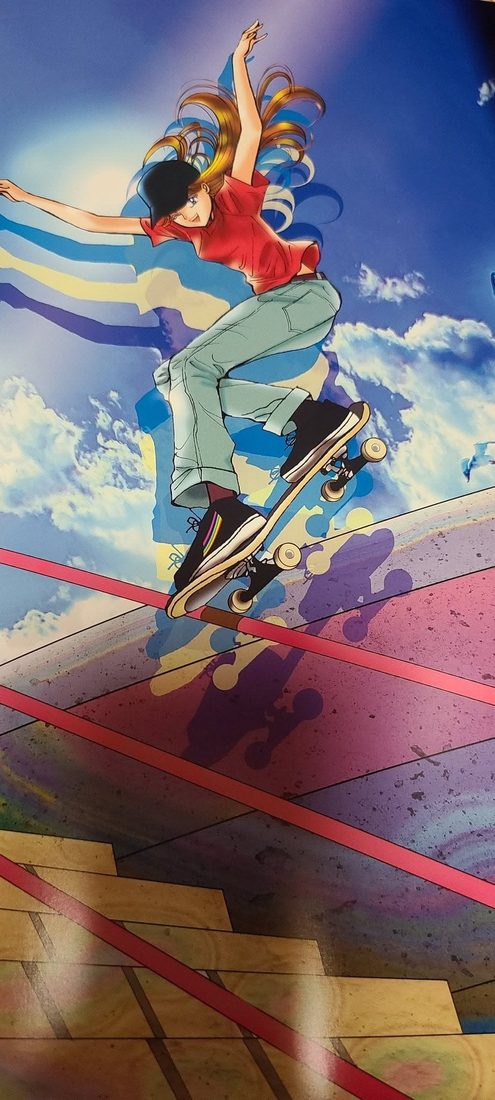
In July 2021 she drew an original illustration for the skateboarding pages of the official programme of the Tokyo 2020 Olympics. Eiichiro Oda took karate, Hajime Isayama sport climbing, Yoshikazu Yasuhiko surfing — one artist to each of the sports making their Olympic debut. Hers is Usagi mid-trick on a ramp, in a red tee and loose jeans.
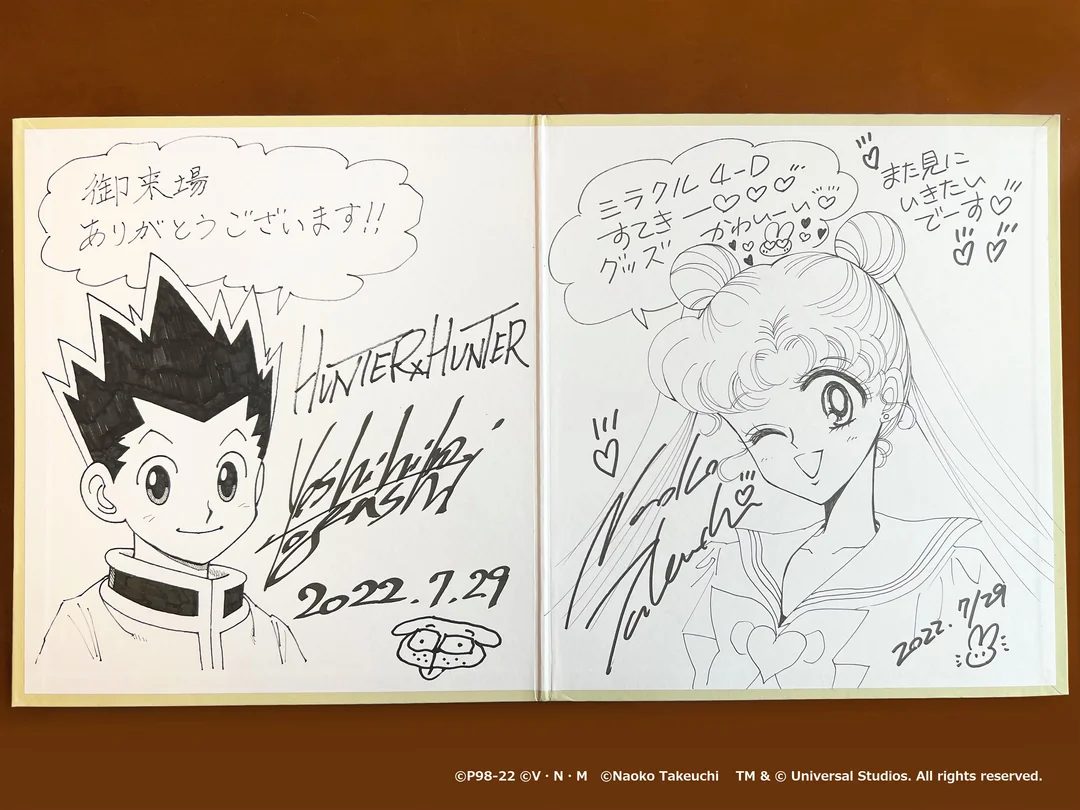
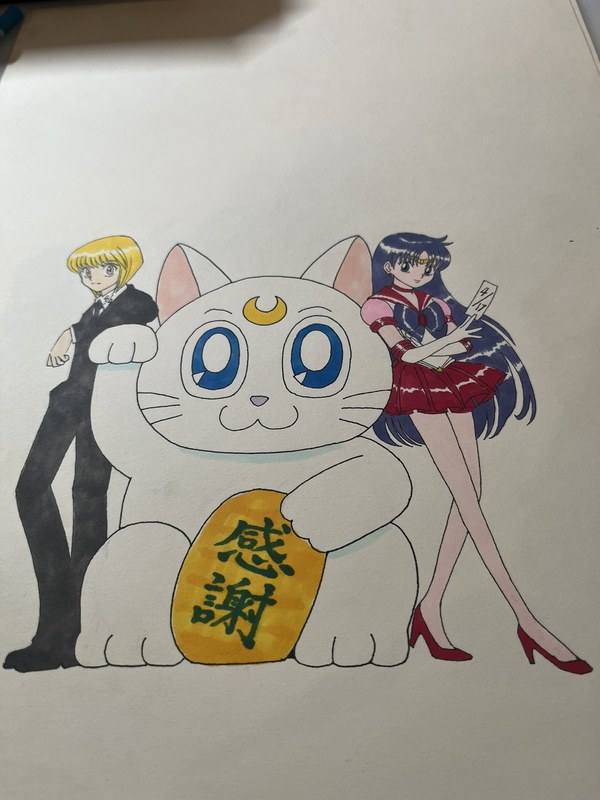
Togashi still draws her characters. In April 2026, announcing that he had finished inking chapter 430 of Hunter × Hunter after his long hiatus, he posted a crossover of his own: Kurapika beside Sailor Mars, and Artemis drawn as a maneki-neko holding a gold coin that reads “thanks”, with Mars carrying a charm marked 4/17 for her birthday. He said the strength had come from his wife.
junk drawer
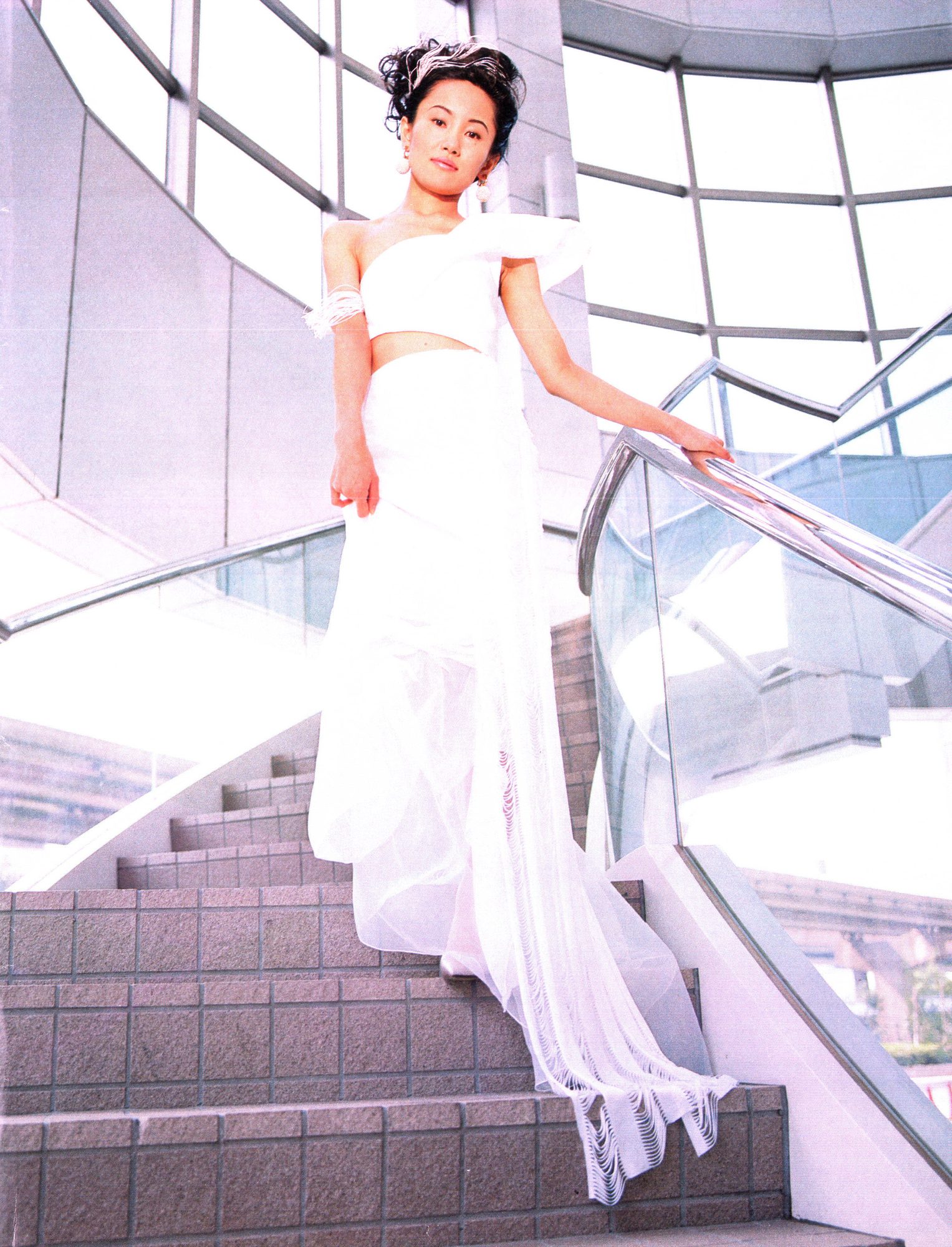
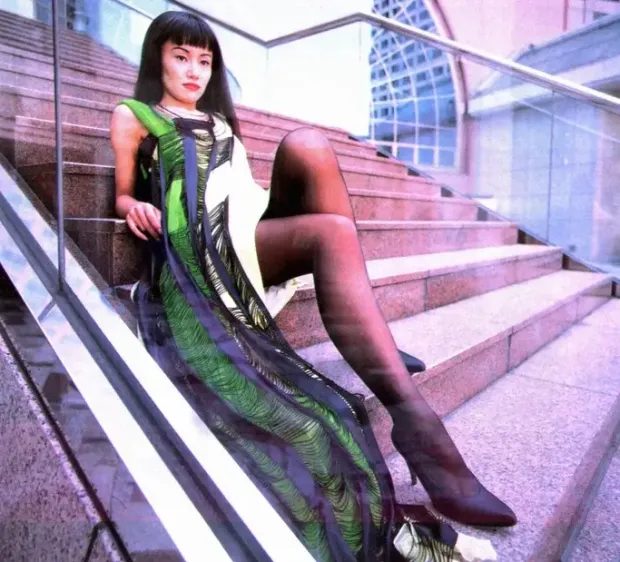
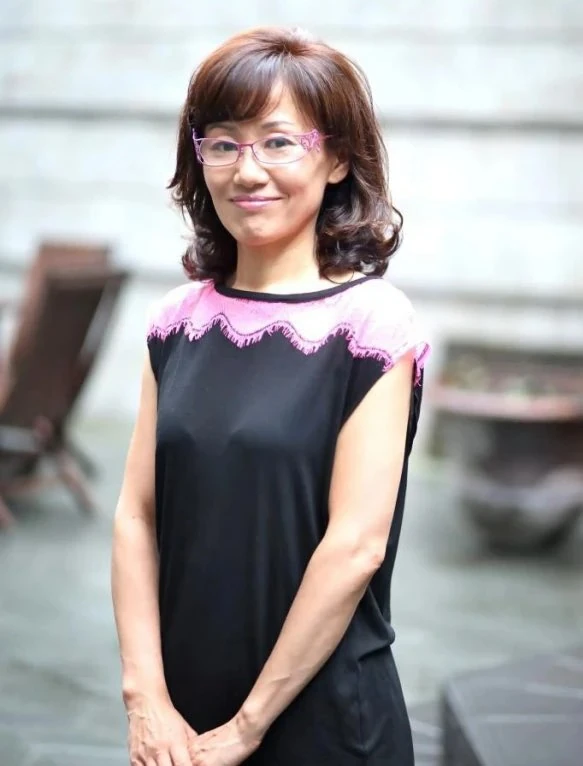
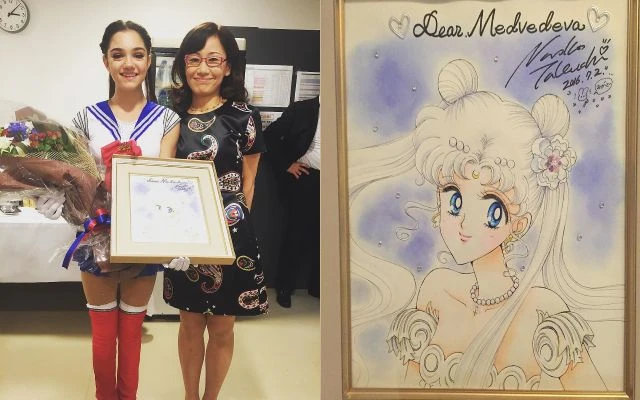
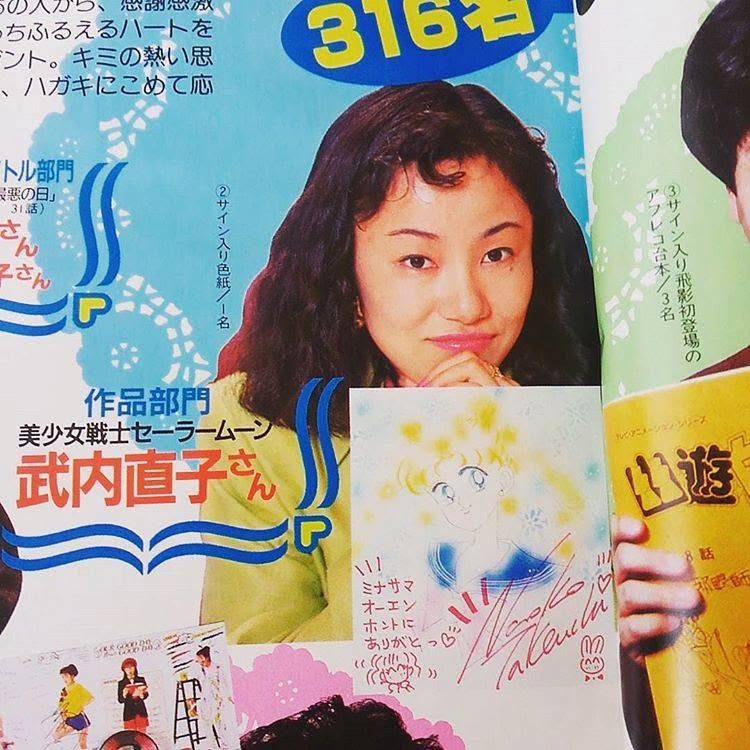
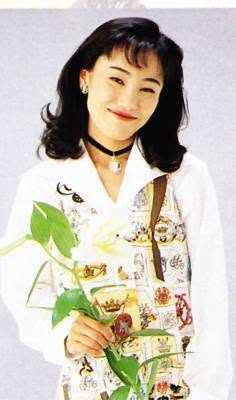
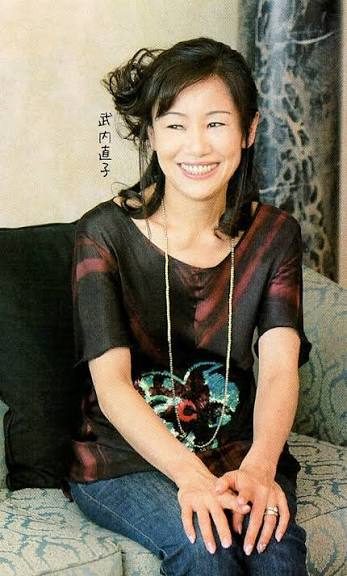
pictures of her that the article never found a sentence for. click to enlarge.
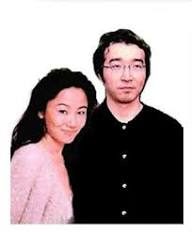
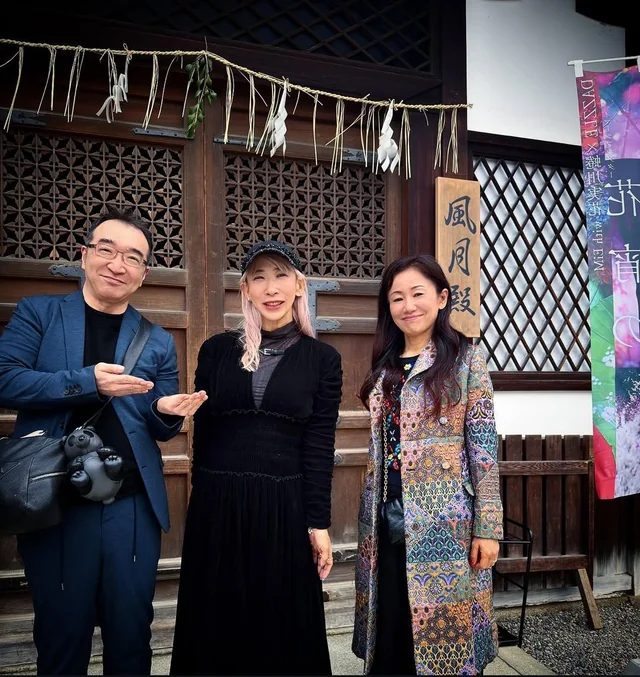
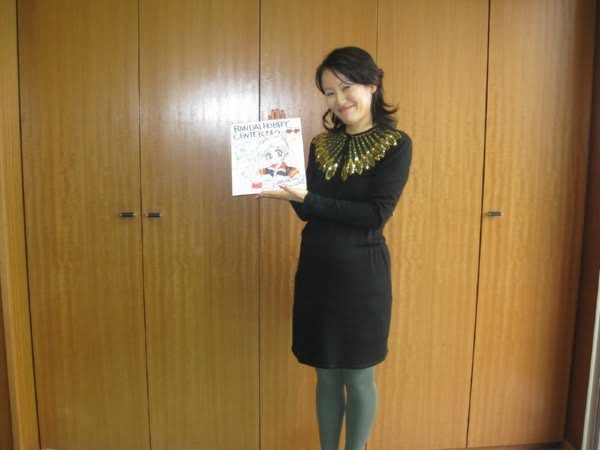



sourcestop
her own words, and her editor’s
- ROLa interview, September 2013 (Miss Dream translation): the editors, Usagi’s hair, the rewrites, the Moon Rod
- ROLa interview, November 2013 (Miss Dream translation): her “goddesses” and “gods”
- Puff interview, May 1994 (Tuxedo Unmasked translation): love and work, science fiction, the rain woman
- Animerica vol. 4 no. 8, August 1996, “Girl Talk With Sailor Moon” (scans shared by Otaku Print Archive): Sailor V’s start, why the heroes are women, her influences, the Moon, the Ferrari
- “Naoko goes to America”, her author’s note on the 1995 New York trip, in the Tokyopop English edition (Sailor Moon Forum thread)
- Smile magazine, December 1998 (scans at Sailor Games): the Comic-Con 1998 panel
- Animerica, November 1998 (page scans at Anime Nostalgia Bomb): a feature on her
- Who was Naoko Takeuchi before Sailor Moon’s debut? (Tuxedo Unmasked, from Puff 1994): the hospital job
- Her shrine job and Rei (Tuxedo Unmasked, from the “Rei-chan Punch!” Q&A, re-release vol. 3)
- Fumio Osano, Comic Natalie, June 2019 (Tuxedo Unmasked translation)
- Fumio Osano, MOVIE WALKER PRESS, February 2021
- 20th-anniversary event report, ITmedia, 2012: “never missed a deadline”
reference
- “The Haute Couture History of Sailor Moon” (Angelica Frey, Jezebel, 31 August 2020, with Emerald King of La Trobe University): the couture matches, and her note on Setsuna’s clothes from the third picture collection
- Vogue Japan, January 2024 issue (on sale 1 December 2023), The Ones to Watch 2023: the interview, the portrait by Takahiro Igarashi, and the new Usagi drawing
- Naoko Takeuchi, Wikipedia: producing the 2003 live action, chief supervisor of the films
- 武内直子, Japanese Wikipedia: Comic Market, her Porsche
- Naoko Takeuchi, WikiMoon: PQ Angels
- Yoshihiro Togashi, Wikipedia: the picture book
- Inkpot Award recipients, Comic-Con International
- Pretty Guardian Sailor Moon Museum, press release, 2022
- Russian figure skating champion who loves Sailor Moon meets author, SoraNews24, July 2016: Medvedeva
- The Sailor Moon artbook revealed, Sailor Moon Fan Network: the Raisonné art book
- Sailor Moon (TV series), Wikipedia: the English dub, the fan petition, Toonami
fan research and video
- Dateline NBC on Sailor Moon, late 1995, YouTube: the US launch and her quote (it misnames her “Naoki”)
- About Naoko Takeuchi, Miss Dream
- Did Kunihiko Ikuhara hate Naoko Takeuchi?, Tuxedo Unmasked: the quote that isn’t in the magazines
- What Naoko told American fans, Tuxedo Unmasked: her Comic-Con answers, from Animerica 6.11 and Smile
- Documentary on her life, YouTube: the Kobe caricature auction
- Documentary on her and Togashi, YouTube: the reading habit and “unstoppable monster”, Turbo-kun, the Jump party; not confirmed elsewhere
The chart is cast for noon on 15 March 1967 in Kofu, whole sign houses, positions from the Swiss Ephemeris. The wedding photograph in the gallery is via Today Anime News.

 CD Player